The Psychology Behind Logical Puzzles: How They Stimulate the Brain and Enhance Creativity
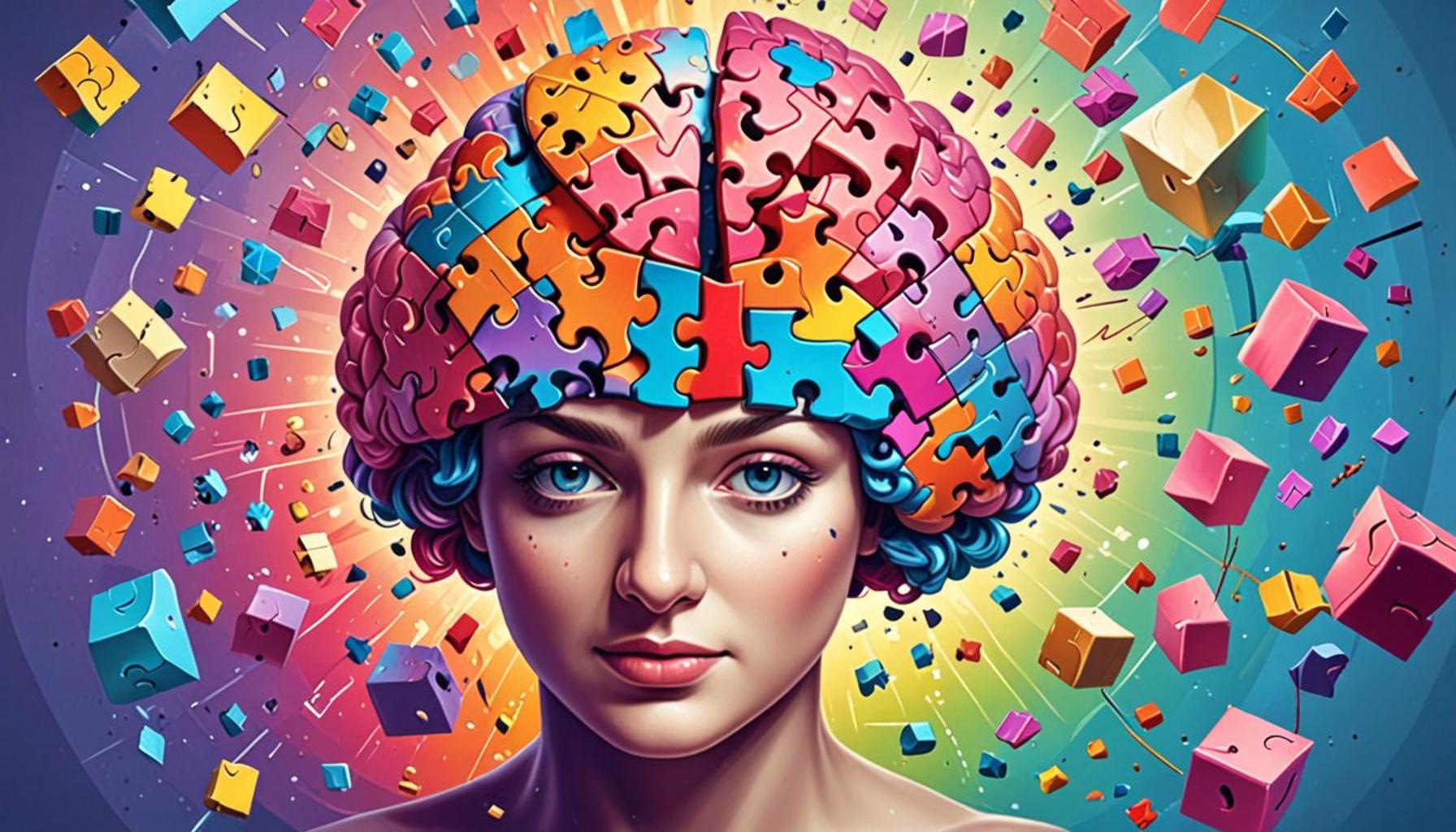
Unlocking the Mind: The Power of Logical Puzzles
Logical puzzles serve as more than mere entertainment; they provide a captivating avenue for understanding human cognition and creativity. The process of engaging with these brainteasers transcends simple problem-solving. It is an intricate psychological dance that requires both critical thinking and the ability to think imaginatively. From Sudoku and crossword puzzles to the classic logic grid puzzles, each type presents a unique challenge that can unlock potential within our minds.
Why are logical puzzles impactful? Their significance lies in the multifaceted benefits they offer. Engaging with these riddles can fundamentally change how we think:
- Stimulate Brain Activity: Puzzles activate various regions of the brain, notably those associated with reasoning, problem-solving, and decision-making. For instance, when attempting to complete a Sudoku grid, players engage their areas of numerical reasoning while bolstering their spatial awareness.
- Enhance Cognitive Skills: Regular engagement with logical challenges can sharpen analytical abilities and improve memory retention. Studies indicate that individuals who routinely solve puzzles experience a marked improvement in data processing speed and overall cognitive agility.
- Foster Creativity: The nonlinear thinking required to solve these puzzles encourages innovative approaches to problems. This can spill over into other areas of life, leading to more creative solutions in fields ranging from business to art.
Research in psychology elucidates the fascinating mental benefits of undertaking logical puzzles. Numerous studies suggest that allocating time to solve these problems can lead to:
- Reduce Stress: Diving into a complex puzzle often provides a much-needed escape, allowing individuals to temporarily disengage from daily stressors and distractions. The immersive focus on a puzzle can be likened to a form of meditation.
- Improve Mood: Completing a challenging puzzle often triggers a profound sense of accomplishment. This small victory sends doses of dopamine through the brain, contributing positively to one’s overall mood and emotional health.
- Develop Resilience: Overcome a tough puzzle, and you cultivate a growth mindset. This persistence nurtures adaptability, teaching individuals that not all problems yield solutions immediately, but rather that skill and creativity can emerge through persistence.
Exploring the intricate relationship between logical puzzles and psychology reveals a wealth of benefits that can enhance mental capacity. Not only do these puzzles provide daily enjoyment, but they also serve as valuable tools for nurturing creativity and innovative thought. So, the next time you sit down to tackle a riddle or challenge, remember that within these playful enigmas lies a pathway to unlocking your full cognitive potential.
DIVE DEEPER: Click here to discover more

The Mental Mechanics of Puzzles: Understanding the Brain’s Response
Logical puzzles engage the brain in remarkable ways, offering insights into how we think and explore our cognitive capacities. The underlying psychology of these challenges draws on concepts such as neuroplasticity, which refers to the brain’s ability to reorganize itself by forming new neural connections throughout life. When we engage with puzzles, we not only exercise existing pathways but also encourage the development of new ones, enhancing overall cognitive function.
How do logical puzzles capture our attention? One of the most appealing aspects of puzzles is their ability to draw an individual into a state of deep focus. In psychology, this state is often referred to as flow, characterized by complete immersion in an activity where time seems to vanish. Logical puzzles create the ideal conditions for this phenomenon. Factors that contribute to achieving flow while solving puzzles include:
- Clear Goals: Each puzzle presents a specific objective, allowing solvers to focus their efforts on the end goal. Whether it’s completing a cryptic crossword or navigating a complex logic grid, the direction is clear, establishing a framework for concentration.
- Immediate Feedback: Puzzles provide instant gratification. Solving a clue or filling in the correct number in a Sudoku grid creates a sense of progress that reinforces the solver’s commitment to the task, stimulating the release of feel-good neurotransmitters such as dopamine.
- Balanced Challenge: The best puzzles challenge our abilities just enough without overwhelming us. This delicate balance piques interest and maintains engagement, fostering a mindset conducive to both analytical and creative thinking.
Research highlights that solving logical puzzles can increase activity in the prefrontal cortex, the area of the brain associated with decision-making, problem-solving, and managing complex cognitive tasks. Furthermore, analyzing patterns and constructing solutions activates the hippocampus, crucial for emotional regulation and memory consolidation. This dual-action of engaging both analytical and creative parts of the brain allows individuals to think critically while fostering an imaginative response to challenges.
Moreover, the psychological benefits extend beyond mere cognitive enhancement; puzzles serve as a practical tool in managing mental health. Regular engagement with logical puzzles has been linked to:
- Boosted Confidence: As individuals master increasingly difficult puzzles, their confidence in tackling challenges grows, leading to improved self-esteem and a willingness to embrace new experiences.
- Stronger Problem-Solving Skills: Puzzles cultivate a mindset that is comfortable with ambiguity and uncertainty, preparing individuals for complex, real-world problems that require innovative solutions.
- Social Interaction: Many logical puzzles, such as escape rooms or collaborative logic challenges, encourage teamwork and interaction, building social skills and community bonds.
As we analyze the psychology behind logical puzzles, it becomes evident that these engaging tasks stimulate the brain in profound ways. Not only do they serve as a source of amusement, but they also present significant opportunities for cognitive growth and emotional well-being. With each puzzle solved, we are effectively shaping our minds and enhancing our creative potential, reminding us of the intricate connection between play and productivity. In the pursuit of brain health, logical puzzles emerge as compelling allies in our personal and cognitive development.
The Role of Logical Puzzles in Cognitive Development
Logical puzzles serve as more than just a source of entertainment; they are potent tools for cognitive enhancement. When individuals engage in solving puzzles, various regions of the brain are activated, promoting neuroplasticity, which is essential for learning and adaptation. Neuroplasticity allows the brain to reorganize itself by forming new neural connections and pathways, thereby increasing its overall efficiency.
Enhancing Problem-Solving Skills
One of the most significant advantages of logical puzzles is their ability to sharpen problem-solving skills. Through regular engagement, individuals learn to analyze situations more effectively, considering multiple perspectives before arriving at a solution. This analytical thinking fosters a mindset that is adept at overcoming obstacles, a skill that is invaluable both in personal and professional scenarios.
Boosting Creative Thinking
In addition to enhancing problem-solving abilities, logical puzzles stimulate creative thinking. The process of finding multiple solutions to a single problem encourages out-of-the-box thinking. As individuals grapple with complex scenarios, they are compelled to think creatively, drawing on a wealth of experiences and knowledge. This intersection of logical reasoning and creativity leads to innovative thought patterns, essential for fields that require high levels of creativity, such as marketing, design, and scientific research.
Stress Relief and Mental Well-being
Engaging in puzzles can also contribute significantly to mental well-being. The focused nature of solving logical puzzles can serve as a form of mindfulness, providing a break from daily stresses. Moreover, the sense of accomplishment derived from solving a challenging puzzle boosts self-esteem and can lead to a more positive mental state. Individuals often find joy in the act of solving, which can facilitate a greater appreciation for life’s challenges as they become viewed as puzzles to be navigated.
Conclusion of Findings
The psychological benefits of logical puzzles are numerous, ranging from enhanced cognitive skills to improved mental health. By investing time in these stimulating activities, individuals not only entertain themselves but also lay the groundwork for intellectual growth. Therefore, it is no surprise that logical puzzles are becoming increasingly recognized as essential tools for enhancing creativity and brain function in various age groups.
| Category | Benefits |
|---|---|
| Cognitive Enhancement | Promotes neuroplasticity and brain efficiency |
| Problem-Solving Skills | Improves analytical abilities for better decision making |
| Creative Thinking | Encourages out-of-the-box solutions and innovative thoughts |
| Mental Well-Being | Enhances happiness through accomplishment and stress relief |
DISCOVER MORE: Click here for insights on Sudoku’s benefits for memory
Enhancing Creativity Through Logical Puzzles: A Deep Dive
Beyond just solving problems, logical puzzles act as powerful catalysts for creativity. Engaging with these challenges fosters an environment where original ideas can flourish, making them valuable tools not just for relaxation but also for innovation. Studies have shown that the act of puzzling can facilitate creative thinking by promoting divergent thinking, which is the ability to generate multiple ideas and solutions from a given set of information.
What mechanisms drive creativity in puzzle-solving? Various cognitive processes intertwine during the execution of logical puzzles, enhancing creative outcomes:
- Association Building: As individuals attempt to solve puzzles, the brain clusters disparate pieces of information together. This cognitive association is critical for generating novel connections and ideas. For instance, solving a lateral thinking puzzle may lead someone to connect seemingly unrelated concepts, resulting in unique problem-solving capabilities.
- Improvised Thinking: Many logical puzzles require a degree of flexibility in thought. The need to adapt one’s strategy or consider alternative approaches imprints the brain’s adaptive resilience, which is essential for creativity. Each time an individual hits a mental block, the ability to shift gears often leads to spontaneous insights.
- Pattern Recognition: Logical puzzles frequently involve spotting patterns, a process that is not only essential for solutions but also stimulates creative reasoning. Recognizing underlying patterns can help individuals formulate theories about various subjects beyond just puzzles, from scientific concepts to business strategies.
Support for these assertions comes from psychological research indicating that participation in brain games, including logical puzzles, correlates with elevated scores on tests measuring creativity. For example, a study by the University of California revealed that subjects who engaged with logic-based activities displayed higher fluency in generating creative ideas compared to controls. This highlights how even casual interactions with puzzles may lead to significant boosts in creative capabilities.
Furthermore, logical puzzles can serve as a form of mental exercise, enhancing executive function—the set of cognitive processes that include working memory, flexible thinking, and self-control. This engenders a holistic approach to creative thinking and innovative problem-solving, where the ability to organize thoughts and manage distractions play critical roles. Engaging in puzzles, especially in a group setting, can sharpen these skills, as they require communication, collaboration, and the breakdown of complex concepts into manageable steps.
The implications of using logical puzzles extend into educational settings and occupational environments. In schools, incorporating puzzles in the curriculum has been shown to enhance both engagement and performance in subjects like mathematics and science, where logical reasoning is crucial. Similarly, in corporate environments, puzzle-solving workshops can lead to heightened creativity among teams, driving innovative projects and solutions.
As the world increasingly requires innovative thinking, understanding the psychological benefits of logical puzzles can offer a roadmap for enhancing creativity across various realms of life. From students seeking academic success to professionals aiming for workplace innovation, logical puzzles present a multifaceted approach to unlocking and nurturing the creative potential that resides within us all.
DISCOVER MORE: Click here to dive deeper
Unleashing Creative Potential Through Logical Puzzles
In conclusion, the exploration of logical puzzles reveals not just a pastime but a profound opportunity to unlock human potential. By engaging in these intricate challenges, we stimulate our brains, enhancing cognitive abilities and fostering creativity in ways that resonate beyond the immediate task at hand. The intricate dance of patterns, associations, and improvisations prompted by puzzle-solving serves as a vehicle for creative thought and innovation. Indeed, research indicates that regular engagement with brain teasers can lead to measurable improvements in executive functions and creative thinking skills.
Furthermore, the implications extend into educational and professional spheres. Schools incorporating logical puzzles into curricula have noted improved student engagement and performance in critical thinking subjects, while workplaces that embrace puzzle-solving foster enhanced collaboration and inventive project development among teams. This dual benefit highlights the versatile role of puzzles as tools for both learning and professional advancement.
As our society navigates an increasingly complex world, the ability to think creatively and solve problems innovatively becomes invaluable. Harnessing the psychological benefits of logical puzzles not only enriches individual lives but also equips communities to tackle challenges with fresh perspectives. Therefore, whether for individual growth or collective brainstorming, integrating logical puzzles into daily routines may just be the key to nurturing the creative capabilities that lie within us all, paving the way for a more imaginative future.