Exploring the Connection Between Sudoku and Enhanced Working Memory

The Cognitive Benefits of Engaging with Sudoku
Sudoku, a number-based puzzle that has garnered a massive following, offers more than just an enjoyable pastime. Recent research underscores a significant relationship between Sudoku and improvements in working memory, enticing both puzzle enthusiasts and cognitive scientists to delve into its myriad advantages.
So, what precisely makes Sudoku an effective tool for boosting cognitive function? Let’s explore some key elements that contribute to this phenomenon:
- Strategic Thinking: To successfully solve a Sudoku puzzle, players must engage in meticulous planning and foresight. Every decision impacts the entire grid, necessitating a thoughtful approach to placing numbers in cells. This strategic mindset can translate to real-life scenarios, helping individuals navigate complex situations with a more analytical lens.
- Pattern Recognition: The crux of Sudoku lies in identifying numerical patterns, which sharpens analytical skills. Players learn to spot recurring sequences and relationships between numbers, greatly enhancing their cognitive flexibility. Research has shown that enhanced pattern recognition aids in various disciplines, including mathematics and science.
- Memory Recall: Engaging in Sudoku cultivates robust memory recall as players continuously track possible numbers for each cell. This ongoing mental exercise activates pathways in the brain related to memory, potentially improving overall cognitive performance.
However, the positive effects of regular Sudoku practice extend beyond just working memory enhancement. Engaging with these puzzles can also lead to:
- Increased Focus: The intricate nature of Sudoku puzzles requires a high level of concentration, which can result in improved attention spans over time. Research indicates that people who regularly challenge themselves with puzzles report significant improvements in their ability to remain focused on tasks both in leisure and at work.
- Enhanced Problem-Solving Skills: The skills honed through navigating complex Sudoku puzzles often carry over to everyday life. Individuals who practice Sudoku tend to approach problem-solving with a clearer, more methodical strategy, allowing them to tackle challenges with greater confidence.
- Stress Reduction: Engaging in Sudoku can serve as a form of mental escapism. As players immerse themselves in solving puzzles, they often experience a decrease in stress levels, which is critical for maintaining overall cognitive health. Many people report that the practice of focusing on a solvable challenge can provide relief from daily anxieties.
As we delve deeper into the connection between Sudoku and enhanced working memory, it becomes increasingly evident that this beloved puzzle is a cognitive gem. Beyond its entertainment value, Sudoku fosters significant improvements in various aspects of mental function. For those looking to boost their cognitive prowess while enjoying themselves, picking up a Sudoku puzzle might be the perfect solution. Join us on this journey to uncover the profound impacts of Sudoku on cognitive abilities and consider integrating this engaging activity into your daily routine for notable mental benefits.
DIVE DEEPER: Click here to uncover the journey of logical puzzles
The Mechanisms Behind Sudoku’s Cognitive Enhancements
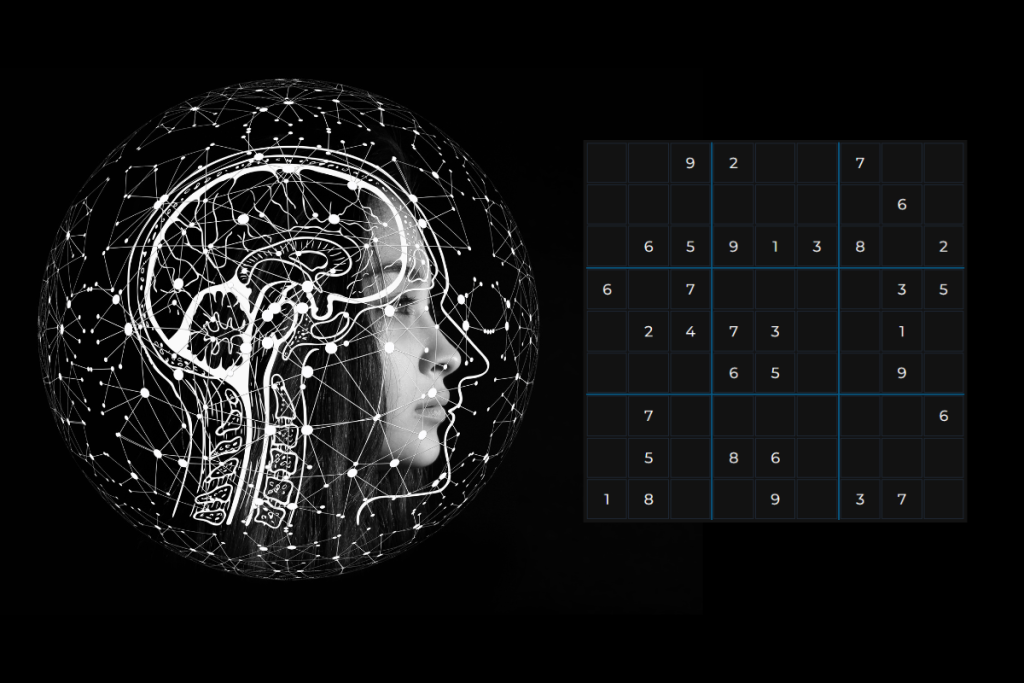
To truly understand the connection between Sudoku and enhanced working memory, it is essential to explore the underlying cognitive mechanisms at play. Engaging in Sudoku puzzles activates various mental processes that strengthen the brain’s neural pathways, leading to measurable improvements in cognitive function.
One of the primary mechanisms through which Sudoku impacts working memory is its demand for mental multitasking. As players work to fill the 9×9 grid with numbers, they must hold multiple factors in their minds simultaneously, such as the current numbers present in each row, column, and 3×3 subgrid. This cognitive juggling acts as an excellent exercise for working memory, which is responsible for temporarily holding and processing information. Studies suggest that regularly engaging in activities that require mental multitasking can indeed enhance working memory capacity over time.
Moreover, Sudoku requires players to constantly engage in self-monitoring. This means assessing choices and reevaluating strategies as they progress through the puzzle. Each error requires critical thinking and adjustment, which reinforces cognitive flexibility—the brain’s ability to adapt to new information and make necessary changes. This recursive evaluation is not just vital for Sudoku; it translates to improved problem-solving skills in everyday situations.
Interestingly, a study conducted at the University of California, Riverside, reveals that older adults who regularly participate in Sudoku demonstrated significantly better performance in working memory tasks compared to their non-puzzle-solving peers. The participants who engaged with Sudoku exhibited a slower decline in cognitive abilities, suggesting that the mental exercise provided by these puzzles is beneficial for maintaining cognitive health as one ages.
- Improved Recall of Information: As players navigate the intricacies of a Sudoku puzzle, the consistent need to remember potential number placements engages working memory. This active recall can enhance memory retention, translating to improved recall abilities in other areas of life.
- Increased Cognitive Control: Sudoku reinforces the skill of cognitive control, which is the ability to manage and direct thoughts in a purposeful manner. This skill is crucial not just for puzzle-solving but also for everyday decision-making processes.
- Strengthened Neural Pathways: The repetitive nature of solving Sudoku puzzles can lead to neuroplasticity, which is the brain’s ability to reorganize itself by forming new neural connections. This plasticity is essential for undergoing cognitive improvement and supporting enhanced working memory.
Engaging with Sudoku is, at its core, more than just providing entertainment. Its multifaceted impact on cognitive function serves as a promising approach to strengthening working memory. As researchers continue to unveil the intricate relationships between gameplay and cognitive development, it becomes clear that incorporating Sudoku into daily routines may offer lasting benefits. This intentional focus on mental fitness encourages individuals to engage proactively in maintaining their cognitive health.
| Cognitive Benefits | Impact on Memory |
|---|---|
| Improved Focus | Sudoku encourages concentration by requiring players to keep track of various numbers and patterns, essential for memory retention. |
| Enhanced Problem-Solving Skills | Engaging with Sudoku leads to better analytical thinking, which can help strengthen one’s working memory by developing the ability to process and recall information efficiently. |
Exploring the intricate relationship between Sudoku puzzles and cognitive functions reveals that players not only enjoy the challenge but also nurture essential aspects of their mental processes. Engaging in Sudoku is believed to result in significant enhancements to one’s working memory. As participants diligently navigate through the grid, they employ numerous cognitive strategies to remember where each number fits. This constant rehearsal not only assists in successfully completing the puzzle but also translates to everyday life, aiding in memory-related tasks. Scientific studies continue to explore how regular engagement in such activities can lead to a decline in cognitive decline as individuals age, making Sudoku a potential tool for maintaining cognitive health.Moreover, the act of repeatedly solving these puzzles strengthens neural pathways, reinforcing the brain’s capacity to retain information over time. By dedicating time to Sudoku, players have the opportunity to enhance the robustness of their memory skills while simultaneously enjoying a rewarding pastime, thus creating a compelling case for the game not merely as entertainment, but also as a vehicle for cognitive improvement.
EXPLORE MORE: Click here to enhance your problem-solving skills
The Broader Cognitive Benefits of Sudoku Engagement
As we delve deeper into the relationship between Sudoku and enhanced working memory, it becomes evident that the benefits of engaging with these puzzles extend beyond immediate cognitive improvements. Research and anecdotal evidence illustrate how regular interaction with Sudoku can foster broader cognitive competencies that are instrumental in daily life.
One often overlooked aspect is the role of pattern recognition that Sudoku demands from its players. The ability to discern and understand patterns is critical in various fields, from mathematics to art. As players identify number placements based on the rules of the game, they cultivate a skill that translates to real-world scenarios, such as data analysis or strategic planning in business. In a 2019 study by the American Psychological Association, participants who engaged in tasks promoting pattern recognition demonstrated significant improvements in their analytical thinking skills. Sudoku stands out as an accessible and enjoyable way to hone this crucial cognitive ability.
Additionally, Sudoku promotes the development of spatial reasoning, a component of working memory that involves visualizing and manipulating objects in three-dimensional space. As players fill out the grid, they mentally rotate and arrange numbers, enhancing their ability to visualize spatial relationships. Engaging in activities that challenge spatial reasoning has been shown to correlate with better performance in STEM subjects, an advantage that can be particularly beneficial for students. According to research published in the journal *Intelligence*, enhanced spatial skills fostered by games and puzzles can lead to improved problem-solving abilities in both academic and non-academic contexts.
Furthermore, tackling Sudoku puzzles engages players in goal setting and persistence. Each game presents a unique challenge, requiring players to identify their goals—whether it is completing a section or finishing the entire puzzle. This process fosters a mindset of perseverance, where players learn to deal with frustration and setbacks. A study conducted by the University of North Carolina found that individuals who participated in challenging cognitive tasks, including Sudoku, developed greater resilience and grit, ultimately benefiting their academic and professional pursuits.
- Motivation to Learn: The intrinsic motivation generated by solving Sudoku puzzles encourages players to approach other learning opportunities with a similar enthusiasm. This cycle of motivation can lead to a lifelong love for learning and cognitive engagement.
- Stress Relief: Engaging in Sudoku can also serve as a form of mental meditation. The concentration required to solve puzzles may provide a welcome escape from daily stressors, improving overall mental well-being and focus.
- Community and Social Interaction: Many enthusiasts join clubs or participate in competitions, fostering social interaction centered around puzzles. This communal engagement benefits emotional health and cognitive development, as sharing strategies and experiences can further enhance working memory through discussion and collaboration.
As such, participating in Sudoku is not merely a solitary pastime but is intricately woven into the tapestry of cognitive enhancement and societal engagement. The multifaceted cognitive benefits derived from consistent Sudoku play underline its potential as a valuable tool for fostering and maintaining optimal working memory throughout an individual’s life. With growing evidence pointing to its long-term advantages, Sudoku emerges as a compelling option for those seeking to enhance their cognitive capacity.
DISCOVER MORE: Click here to delve into the world of puzzles
Conclusion: Unlocking Cognitive Potential through Sudoku
In summary, the exploration of the connection between Sudoku and enhanced working memory reveals a profound interplay that extends well beyond mere puzzle-solving. Engaging regularly with Sudoku not only sharpens critical cognitive skills—such as pattern recognition and spatial reasoning—but also instills essential traits like resilience and goal-oriented persistence. As the evidence mounts, it becomes increasingly clear that these benefits can significantly enrich various aspects of daily life, from academic performance to professional development.
Furthermore, the intrinsic motivation that accompanies the thrill of solving complex puzzles cultivates a lasting passion for learning, encouraging individuals to tackle more challenging cognitive tasks. The stress-relieving qualities of Sudoku also provide a leisurely avenue for mental rejuvenation, further enhancing focus and mental well-being. On a communal level, the social interactions that arise from participating in Sudoku clubs or competitions foster a sense of belonging, which can amplify emotional health and cognitive engagement.
As we reflect on these insights, we are invited to reconsider Sudoku not just as an entertaining pastime, but as a formidable ally in the quest for improved cognitive function. For individuals seeking to harness their cognitive potential, incorporating Sudoku into daily routines may yield invaluable dividends. With ongoing research hinting at even greater long-term benefits, Sudoku stands as both a simple game and a gateway to cognitive empowerment and lifelong learning.